
Long-term business growth is rarely the result of a single breakthrough moment. More often, it is the outcome of deliberate decisions, consistent systems, and operational discipline across multiple areas of a company. While short-term wins can create momentum, sustainable growth depends on how well an organization builds its internal foundations.
Companies that scale successfully tend to share a common trait: they invest early in structure. This includes how they hire, manage finances, use technology, and maintain operational efficiency as complexity increases. Without these foundations, growth can quickly become chaotic, leading to inefficiencies, financial strain, and employee turnover.
This article explores the essential pillars that support long-term expansion. Each section focuses on practical, actionable strategies that businesses can implement to strengthen their operations and prepare for scalable growth. The goal is to provide a roadmap that helps organizations grow with stability rather than uncertainty.
Building a Stronger Talent Acquisition System
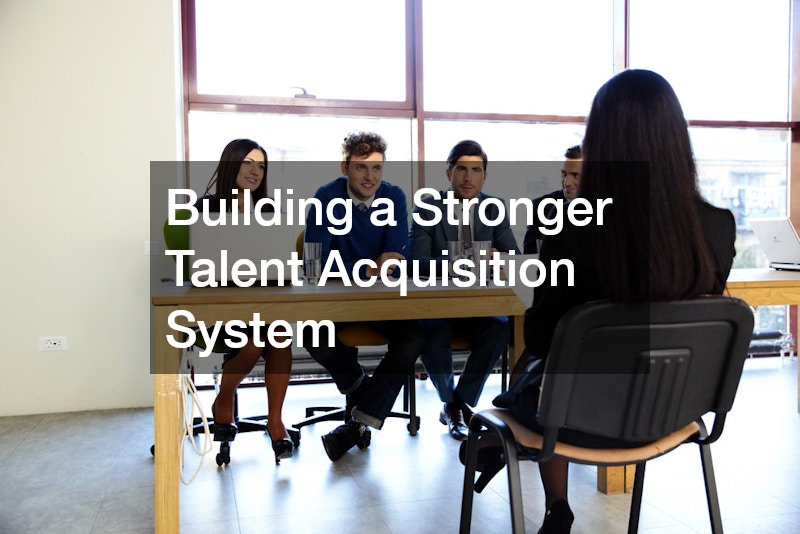
A company’s ability to grow is directly tied to the quality and reliability of its workforce. Many businesses struggle not because of a lack of demand, but because they cannot consistently attract, hire, and retain the right people at the right time. Building a structured hiring system is essential to avoid these bottlenecks, especially when growth outpaces internal hiring capacity.
Partnering with a recruiting firm can help organizations access a broader and more qualified talent pool. These firms specialize in identifying candidates who match both technical requirements and cultural fit, reducing the time spent on unproductive interviews and hiring mistakes. Beyond sourcing candidates, many recruiting firms also provide market insights, such as salary benchmarks and talent availability trends, which help companies remain competitive in tight labor markets.
At the same time, using a job placement agency can provide flexibility during periods of rapid growth or seasonal demand. Instead of rushing permanent hires, businesses can fill roles efficiently while maintaining operational continuity. This approach is especially valuable for companies expanding into new markets or launching new service lines where staffing needs may fluctuate before stabilizing.
However, external partners alone are not enough. Internal hiring structure is equally important for long-term success. Companies should build repeatable systems that reduce inconsistency and bias in hiring decisions while improving speed and quality.
Key strategies for improving talent acquisition:
- Define clear job roles and responsibilities before hiring begins
- Develop standardized interview processes to ensure consistency
- Build long-term relationships with external hiring partners
- Track hiring metrics such as time-to-fill and retention rates
- Create onboarding systems that integrate new employees quickly
- Establish internal talent pipelines through employee referrals and development programs
- Use structured scorecards to evaluate candidates objectively
Another often overlooked strategy is workforce forecasting. By projecting hiring needs 6–12 months ahead, companies can avoid reactive hiring cycles that lead to poor decisions. This also allows leadership to align hiring with budget planning and operational expansion goals.
Additionally, retention must be incorporated into the acquisition strategy. High turnover can undermine even the strongest hiring pipeline. Investing in employee engagement, training programs, and clear career progression paths helps ensure that new hires remain productive long after onboarding.
A strong talent pipeline ensures that growth does not stall due to staffing shortages. Instead, the organization remains adaptable, responsive, and prepared for expansion.
Strengthening Financial Control and Legal Stability
As businesses grow, financial and legal complexity increases significantly. Without proper oversight, even profitable companies can face compliance issues, cash flow problems, or legal disputes that threaten long-term stability. Growth often introduces new revenue streams, more vendors, additional employees, and expanded regulatory exposure—all of which require stronger governance rather than informal decision-making.
Working with a business lawyer helps organizations establish strong legal foundations. This includes structuring contracts, protecting intellectual property, and ensuring regulatory compliance. Legal support becomes especially important when entering new markets or forming partnerships, where unclear agreements can lead to costly misunderstandings. A business lawyer can also help design risk management frameworks to minimize liability across operations, employment practices, and vendor relationships.
Equally important is maintaining accurate and consistent financial oversight through business accounting systems. Proper accounting ensures that leadership has a clear understanding of revenue trends, expenses, and profitability. Without reliable data, business leaders may make expansion decisions based on assumptions rather than financial reality. Strong accounting systems also improve tax compliance, investor confidence, and long-term forecasting accuracy.
As companies mature, financial transparency becomes a strategic advantage rather than just an administrative requirement. It allows leadership to identify inefficiencies early, allocate resources more effectively, and respond quickly to market changes.
Practical steps to improve financial and legal stability:
- Separate business and personal finances completely
- Conduct monthly financial performance reviews
- Establish legally reviewed contracts for all vendors and partners
- Implement budgeting systems tied to strategic goals
- Regularly audit financial statements for accuracy
- Create cash flow forecasts to anticipate short-term liquidity needs
- Maintain a documented compliance checklist for regulatory requirements
- Set approval thresholds for major expenses to prevent uncontrolled spending
Another important but often overlooked practice is scenario planning. Businesses should regularly model best-case, expected-case, and worst-case financial outcomes. This allows leadership to prepare contingency plans for downturns, supply chain disruptions, or unexpected legal challenges.
When financial clarity and legal protection are prioritized, businesses are better positioned to make confident growth decisions without unnecessary risk.
Enhancing Operational Systems and Growth Readiness
Operational efficiency plays a central role in determining whether a business can scale effectively. As companies grow, manual processes often become inefficient, resulting in delays, errors, and higher costs. What may have worked for a small team quickly becomes a bottleneck when volume increases, making early investment in systems a critical success factor.
Modern it services provide the backbone for scalable operations. From cloud infrastructure to cybersecurity and workflow automation, technology enables businesses to operate more efficiently while reducing administrative burdens. These services also support remote collaboration, real-time data access, and system integration across departments, which becomes increasingly important as teams expand across multiple locations or time zones.
A key advantage of a strong IT infrastructure is consistency. When systems are properly configured and maintained, employees spend less time troubleshooting technical issues and more time focusing on productive work. This directly improves output quality and operational reliability.
When organizations begin planning business expansion, it is critical that their systems can support increased demand. Expansion without operational readiness often results in customer dissatisfaction and internal breakdowns. For example, a company that doubles its customer base without scalable order management or communication systems may quickly face service delays and reputational damage.
Operational readiness is not just about technology—it also involves process discipline and organizational alignment. Teams must understand how workflows connect, where data is stored, and how decisions are escalated.
Ways to strengthen operational readiness:
- Automate repetitive administrative tasks
- Centralize data storage for easier access and reporting
- Implement cybersecurity protocols to protect sensitive information
- Use scalable software platforms that grow with the business
- Regularly evaluate system performance and upgrade when needed
- Standardize workflows across departments to reduce inconsistency
- Create documentation for core processes to support training and continuity
- Establish monitoring systems to detect inefficiencies early
In addition, businesses should adopt a proactive maintenance mindset rather than a reactive one. Instead of waiting for systems to fail or slow down, regular audits and performance reviews should be scheduled. This includes evaluating software performance, server capacity, and the effectiveness of tool integration.
Another important consideration is scalability testing. Before launching new products or entering new markets, companies should simulate increased demand to identify potential system weaknesses. This helps prevent costly disruptions during actual growth phases.
Businesses that invest in strong operational systems can scale more smoothly and respond quickly to new opportunities without overwhelming internal resources.
Planning Physical Growth and Organizational Movement
As businesses expand, physical space and logistics become increasingly important. Choosing the right environment and managing transitions efficiently can significantly impact productivity and employee satisfaction. While digital systems often receive most of the attention during scaling, physical infrastructure can either reinforce growth or quietly limit it over time.
Selecting appropriate business real estate is more than just finding office space. It involves evaluating location accessibility, infrastructure capacity, lease flexibility, and long-term scalability. A poorly chosen space can limit growth or unnecessarily increase operational costs. For example, insufficient parking, limited internet infrastructure, or restrictive lease terms can quickly become barriers once a company begins hiring or increasing client traffic.
Beyond cost considerations, businesses should also think about how physical environments influence culture and performance. Open collaboration spaces may benefit creative teams, while more structured layouts may support operational or client-facing departments. The goal is to align physical space with how work actually gets done.
When relocating or expanding facilities, working with business moving companies helps minimize disruption. Professional movers ensure that equipment, furniture, and critical systems are transported safely and efficiently, reducing downtime during transitions. This becomes especially important for companies with sensitive equipment, large inventories, or tight operational schedules, where even a short interruption can impact revenue.
A poorly managed move can lead to lost productivity, damaged assets, and employee frustration. A well-planned transition, on the other hand, can actually improve workflows by forcing organizations to reassess layout efficiency and eliminate outdated setups.
Actionable strategies for managing physical growth:
- Evaluate space requirements based on 3–5 year growth projections
- Choose locations that support employee access and client engagement
- Plan office layouts to maximize collaboration and efficiency
- Schedule moves during low-impact business periods
- Document all equipment and assets before relocation
- Conduct a phased move strategy to reduce operational downtime
- Test utilities and IT infrastructure before full occupancy
- Assign internal move coordinators to oversee communication and logistics
It is also important to consider scalability within the physical environment itself. Businesses should avoid locking into spaces that only meet current needs. Instead, flexible layouts, modular furniture, and expandable work areas can help accommodate future hiring without repeated relocations.
In addition, communication plays a major role in successful transitions. Employees should be informed early about timelines, expectations, and workflow changes. Clear communication reduces uncertainty and helps maintain productivity during the adjustment period.
A well-executed physical transition ensures that growth does not interrupt operations but instead enhances them.
Improving Brand Consistency and Workplace Presentation
As businesses grow, maintaining a consistent and professional brand image becomes increasingly important. Every interaction a client or partner has with a company contributes to its overall reputation, including both physical branding and workplace environment. When branding becomes inconsistent across teams, locations, or materials, it can weaken trust and dilute the company’s perceived reliability.
Using business card print shops ensures that branding materials remain consistent, professional, and aligned with the company’s identity. Even in a digital-first world, physical materials still play a key role in networking and relationship building. A well-designed business card, brochure, or printed handout often becomes a tangible extension of the brand, especially during conferences, sales meetings, and in-person introductions. Ensuring uniformity in color, typography, and messaging reinforces recognition and professionalism.
In addition, maintaining a clean and organized workspace through a business cleaning service supports both employee productivity and client perception. A well-maintained environment signals professionalism and attention to detail. Clients walking into a disorganized or unclean office may subconsciously associate that environment with disorganization in operations, even if the actual service quality is strong.
Workplace presentation also directly impacts employee morale. Employees tend to feel more motivated and focused in structured, clean environments that visually align with company values. Over time, this contributes to better performance and lower turnover.
Practical ways to enhance brand and workplace consistency:
- Standardize all printed and digital brand materials across departments
- Ensure employees use consistent branding in external communications such as emails, proposals, and presentations
- Maintain clean and organized office environments at all times
- Schedule regular professional cleaning services to uphold workplace standards
- Align physical branding with overall company messaging and tone
- Create internal brand guidelines that are easy for employees to follow
- Regularly audit marketing materials for consistency across platforms
- Design office spaces that reflect brand identity and culture
Another important strategy is reinforcing brand consistency through employee training. When staff understand not only what the brand looks like but also what it represents, they are more likely to communicate it accurately in client interactions. This includes tone of voice, visual usage, and even how services are described.
Sustainable business growth is built on structure, not chance. Companies that succeed over the long term invest in strong foundations across every area of their operations, from hiring and finance to technology, infrastructure, and branding.
Growth becomes significantly more manageable when systems are designed to scale rather than react. Instead of constantly fixing problems caused by rapid expansion, businesses with strong foundations can focus on innovation, efficiency, and strategic decision-making.
By strengthening internal processes, improving operational readiness, and maintaining consistency across all touchpoints, organizations position themselves for stable, scalable growth. The result is not just expansion, but resilience—an essential quality for long-term success in any industry.
